
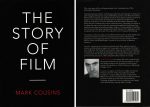
 I have had a copy of Mark Cousins’ book THE STORY OF FILM for some time. It was left here by a fellow studying film at one of our major universities.
I have not read it because the documentary series based on its title begins with the jaundiced premise Hollywood has been racist from the start. This may and does fit in with the mood of our times which points out that great people have feet of clay.
Don’t we all?
Yesterday I took a glance at Cousins’ book. In it I read that Walt Disney’s PINOCCHIO (1940) repeated the box office success of Disney’s SNOW WHITE AND THE SEVEN DWARFS (1937).
This is not true.
“Initially, Pinocchio was not a box-office success.[3] The box office returns from the film’s initial release were both below Snow White’s unprecedented success and below studio expectations.[57] Of the film’s $2.289 million negative cost – twice the cost of Snow White – Disney only recouped $1 million by late 1940, with studio reports of the film’s final original box office take varying between $1.4 million and $1.9 million.[58] Animation historian Michael Barrier notes that Pinocchio returned rentals of less than one million by September 1940, and in its first public annual report, Walt Disney Productions charged off a $1 million loss to the film. Barrier relays that a 1947 Pinocchio balance sheet listed total receipts to the studio of $1,423,046.78. This was primarily due to the fact that World War II and its aftermath had cut off the European and Asian markets overseas, and hindered the international success of Pinocchio and other Disney releases during the early and mid-1940s.[59] Joe Grant recalled Walt Disney being “very, very depressed” about Pinocchio’s initial returns at the box office.[57] The distributor RKO recorded a loss of $94,000 for the film from worldwide rentals of $3,238,000.[60]”
https://en.wikipedia.org/wiki/Pinocchio_(1940_film)
“Bambi lost money at the box office for its first release; out of its $1.7 million budget, it only grossed back $1.64 million.[35]”
https://en.wikipedia.org/wiki/Bambi
“The combined average receipts from each roadshow was around $325,000, which placed Fantasia at an even greater loss than Pinocchio.[104]”
https://en.wikipedia.org/wiki/Fantasia_(1940_film)
This is but one detail out of many but when I make a statement I first make sure the statement is true.
It’s easy enough to check the figures.
A friend with an animus towards Walt Disney wrote that SONG OF THE SOUTH (1946) had been a box office failure. When I told him it had not been he got very irate. Then I gave him access to the box office figures. The film made a profit.
https://en.wikipedia.org/wiki/Song_of_the_South
One of the first things I learned when I began collecting 8mm versions of silent films I had read about in the mid 1960s was how different the actual movies were from the descriptions of them I had read in film history books. When I began screening movies publicly in Toronto that awareness of the big difference between what I read on the page and saw on the screen increased immensely.
The story of the movies is one of ordinary men and women, the product of their times, working in an industry first described as bastard theater.
Commercial success was and is rare, much more rare than people realize.
It is a story of courage facing great odds which almost always ends in failure.
Who could have dreamed that mighty MGM which once boasted of having more stars than there were in Heaven would today be a shadow of its former self that no longer owns the library produced during its glory days?
We don’t need books by lazy academics who fit the facts to their thesis.
Unfortunately we have them in abundance.
One of the best we can read is David Mamet’s BAMBI VS. GODZILLA which is written by someone who has been and is active in the industry.
Mamet writes, “Stay out of school.”
I’m with him.
https://en.wikipedia.org/wiki/The_Story_of_Film:_An_Odyssey
https://www.amazon.com/Story-Film-Mark-Cousins/dp/186205942X
« What Happened During the Ice Storm by Jim Heynen John Smialek R.I.P. November 9th, 2019. »