
From a post on GREENBRIAR PICTURE SHOWS: BACK IN A CARTOON BARREL https://greenbriarpictureshows.blogspot.com/ .
“Here’s oddity he mentioned, re the Disney features. Everyone, but everyone, was over the moon for Snow White, adults included, but by Pinocchio and then Bambi, bloom was off the rose. These were for children, said grown-ups, a sentiment strange to Conrad, for he saw both first-run and found them as magical as Snow White. What had so changed parent impression? He speculated that Gulliver’s Travels, coming between SW and Pinocchio, did damage, being a “very bad” picture and maybe a blight upon notion of seeing more animated features.”
Response:
It’s not that GULLIVER turned audiences off animation features. It did not. PINOCCHIO, BAMBI and FANTASIA did not make a profit in first release because the cost of producing them was so high. DUMBO was the first since SNOW WHITE to make a profit in first release because its costs were low.
Once Disney saw the value of re-releasing those films they made a profit. They continue to make profits.
One thing I learned by observing my audience when I began doing long runs is that every night the audience reacts completely different but that each night draws a specific audience that is the same week after week.
The Monday night crowd is completely different from the Tuesday night crowd as is Wednesday, Thursday, Friday, Saturday and Sunday but week after week Sunday night’s audience always reacts the same. I asked friends who worked in live theater if they had observed this. They said yes.
Perhaps DBenson can comment.
We like to think we are unique but observation leads me to a different conclusion.
My Friday night audience laughed at everything. Saturday night was more discerning. Sunday nights were terrifying at first. They laughed at little but walked out saying the show was excellent. As an experiment some might try going to a movie or a play every night for a month or more just to observe how each night’s audience reacts. The audience is the only teacher. Collectively it sees things we as individuals miss.
Also how much an audience pays affects its reaction. I used to ask for just $1 so that everyone could afford to come. I got a lot of people but could not cover my costs. Also when I gave talks many were abusive. I took a chance and raised the price to $10. Yes, I got fewer people but I made more money. I was able to cover my costs.
As well the audience valued what I brought to the table. All way around I was able to do a better job.
When I took the programs on the road I insisted the theaters charges $10 not the regular $1 they usually charged. They said their audience would not pay it. We’re talking 1,000 seat theaters that regularly pulled 100 people at most a night tops.
My programs filled those theaters with often hundreds turned away because we could not get them in. The theaters I worked with made more money in one night with me than they did all month with their other shows combined. I thought they would appreciate this. To my surprise they did not. The word was, “Reg Hartt is a jerk but his shows make money.” To them I was a jerk because everything I did and do goes against what they learned and learn in the class room.
Our job as showmen is to fill theaters.
Another thing I learned is that intermissions are vital. During them the audience is relaxed. They look to see how other people are reacting. They buy more popcorn or whatever. They look over the merchandise. But once the show is over they leave. If you have stuff you want to sell you will sell it at the intermission.
I did my SEX & VIOLENCE CARTOON FEST at a huge out of Toronto theater. I did three two hour shows with intros. The fellow I had with me said the management had complained my talks were too political. I said to him, “I’ll tone it down for the second show. You tell me how the audience reacts on the way out.” He said, “They walked out saying it was not as good as they expected.” I said, “On the next show I’m going to crank it through the roof. Tell me how they react on the way out.” They walked out like they had seen God.
I did six shows in a row at New York’s Thalia Theater in 1992. 11am, 1pm, 3pm, 5pm, 7pm, 9pm. The early shows had a handful of people most of whom stayed over so that by 9pm the place was packed. The final show was a tribute to Shamus Culhane who with is lovely wife Juana and many friends was in the audience. Everyone was wowed. One very old Asian man had sat back by the projection room door from 11 am to 11pm. He said, “Thank you. You have given me the best day of my life.” I looked at how Asians of his generation had historically been treated in America and Canada. I knew then I had done something that day.
Showmanship, the art of selling a show, is an art that can only be learned in practice.
When KING LONG was promoted as “THE 8TH WONDER OF THE WORLD” the people behind that promise knew that they had damn well better deliver on it.
A couple of years ago a television network called to say they had read good things about my work on the web and wanted to do a program on me. After we talked I surfed the web, What I found after wading through the “anonymouse” slanders surprised me: https://www.ranker.com/list/famous-male-orators/reference.
A good promoter is a cousin to the ringmaster in a circus. Sure the acts are great. It’s the ringmaster’s job to ensure the audience is primed to experience that greatness. S/he is the glue that binds. Without that ringmaster the acts, no matter how great, fall flat but a poor ringmaster can make them flatter than flat.
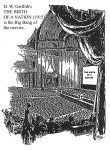
As for price, the movies were a five and dime novelty when D. W. Griffith charged the top Broadway price of $2 for THE BIRTH OF A NATION. That is a little over $50 today. When we charge more people come expecting more. They come in greater numbers. Our job is to make sure they get what they paid for and then some.
Yes, there will always be an audience that wants it cheap.
They are not the audience we should aim for.
The audience that wants it exciting is the audience we can build with.



« Cloris Leachman, Gertie The Dinosaur Activist looks back 40 years to Toronto’s bathhouse raids — the flashpoint moment in fight for LGBTQ rights in Canada »