
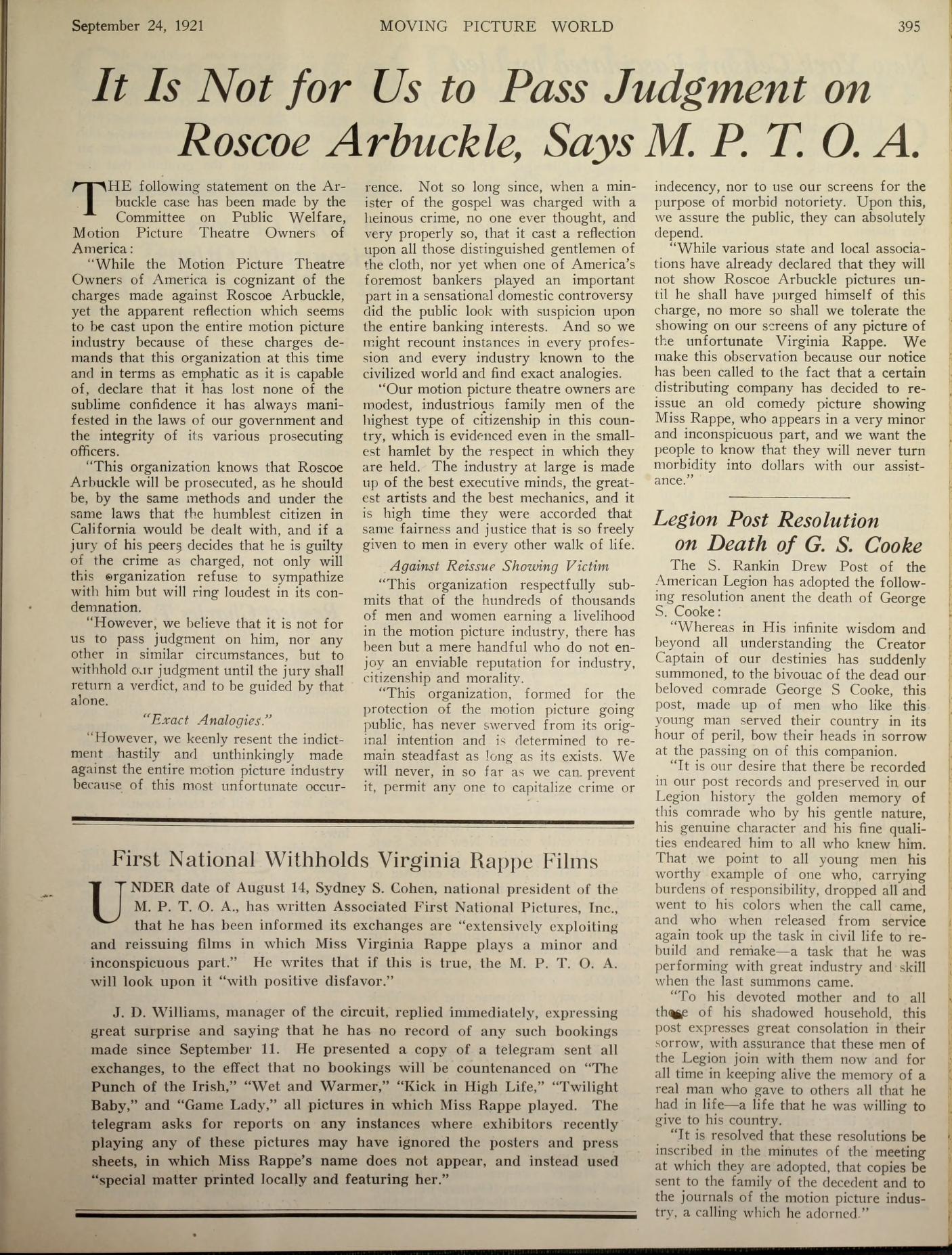
When should we name an accused? Inside our debate –Toronto Star
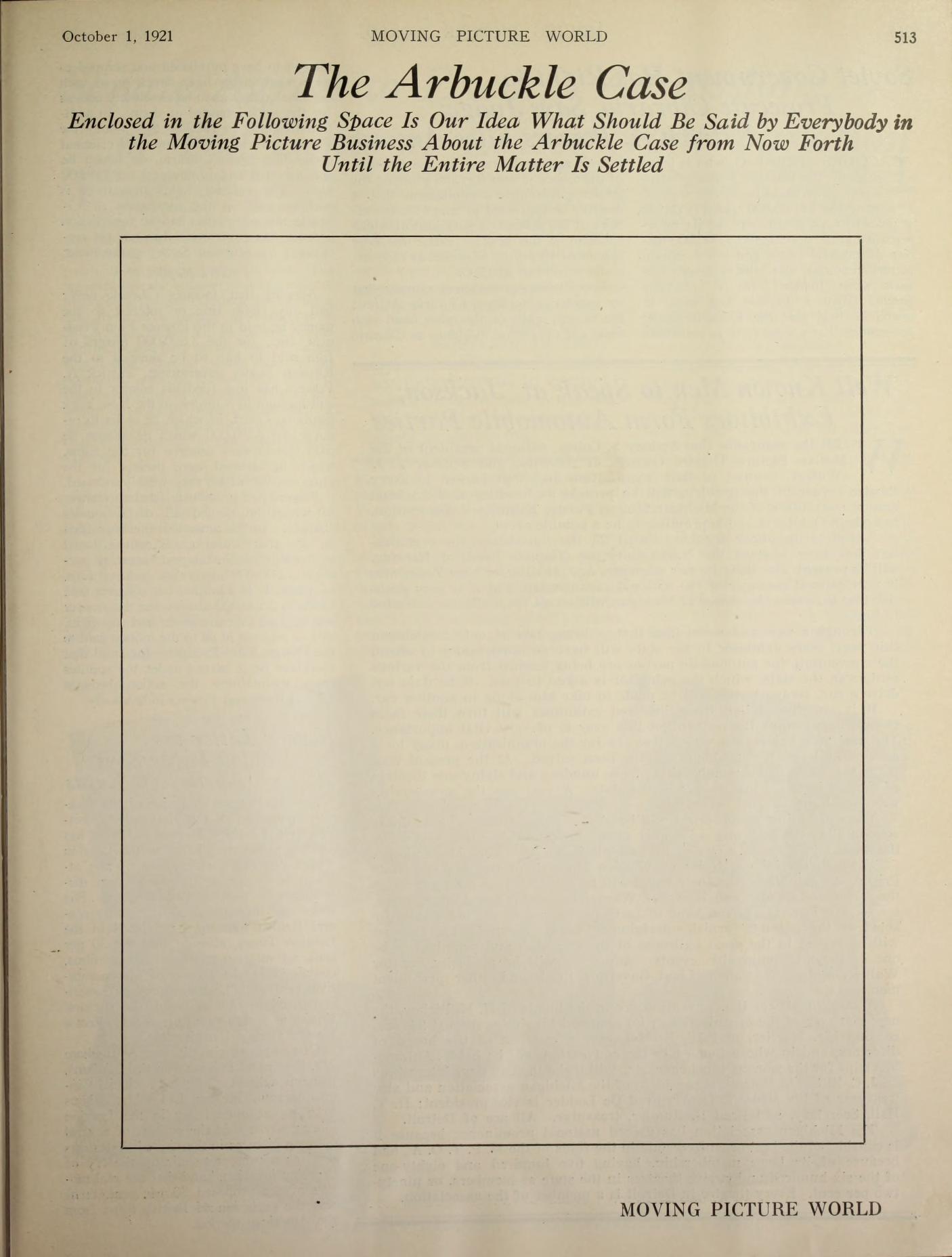
- Call for total silence: The text explicitly states that the blank box represents “Our Idea What Should Be Said by Everybody… Until the Entire Matter Is Settled.”
- Fight against yellow journalism: It was a direct protest against the sensational, unverified tabloid headlines of 1921 that were already convicting Arbuckle in the court of public opinion before his trials even began.
- Protection of due process: The editorial argued that rampant industry gossip was destroying lives and damaging the reputation of the entire moving picture business.
-
As a general rule, in recent years the Star takes care in naming people accused of crimes. We generally do so only when we expect to follow the case through the courts. The information is public, so the question usually isn’t whether we can publish a name, but whether we should, given the amplification that comes with reporting it. (Historically there have been different standards for the naming test — we have an unpublishing committee that deals with requests to remove names from old articles. I’ll tell you more about that process in a future newsletter).
In a couple of recent cases, we faced an unusual circumstance. We were writing about failures of the justice system, not the crimes themselves, in cases we hadn’t previously covered. Should we identify the accused anyway?
One case involved a man accused of kidnapping someone at gunpoint. The judge concluded the accused was responsible, but stayed the charges after finding police officers beat him during his arrest, falsified their notes and repeatedly gave false and misleading testimony in court.
I found myself genuinely torn. Our usual practice would have been not to identify someone who was no longer facing criminal charges. At the same time, the judge had concluded he committed a very serious crime. In the end, I was persuaded that because our story was about the failures of the justice system, not the kidnapping itself, we should follow our usual practice and not name him.
Just a few days later, we faced a similar question in another case about a teacher accused of sexually assaulting a student. The case was dismissed because of court delays. This time we named the accused because he held a position of public trust as a teacher.
These decisions are rarely clear cut. I often find myself asking: What would a reasonable reader expect us to do? We try to weigh the public’s right to know against the potential harm of identifying someone whose legal circumstances have fundamentally changed.
I’m curious where you land. If a judge concludes someone committed a serious crime, but the charges are ultimately stayed because of police misconduct or another failure of the justice system, should news organizations continue identifying the former accused?
No. Because we then are acting as judge, jury and executioner. M.Y.O.B.
- ============================================================
« Cartoons At Reg Hartt’s CineForum. 7pm Sunday: THE BIRTH OF A NATION Introduced by Reg Hartt. https://www.ranker.com/list/famous-male-orators/reference »