
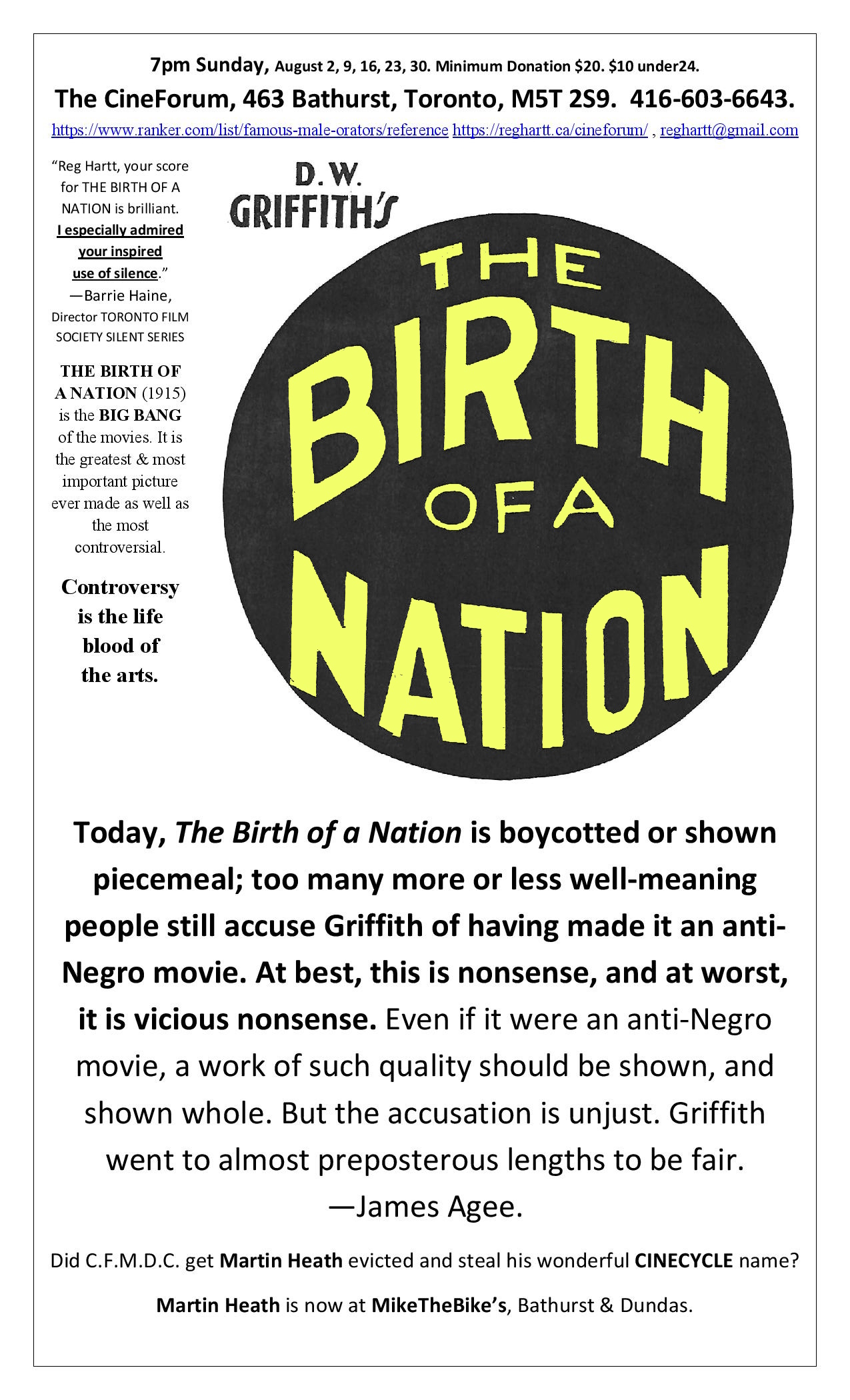
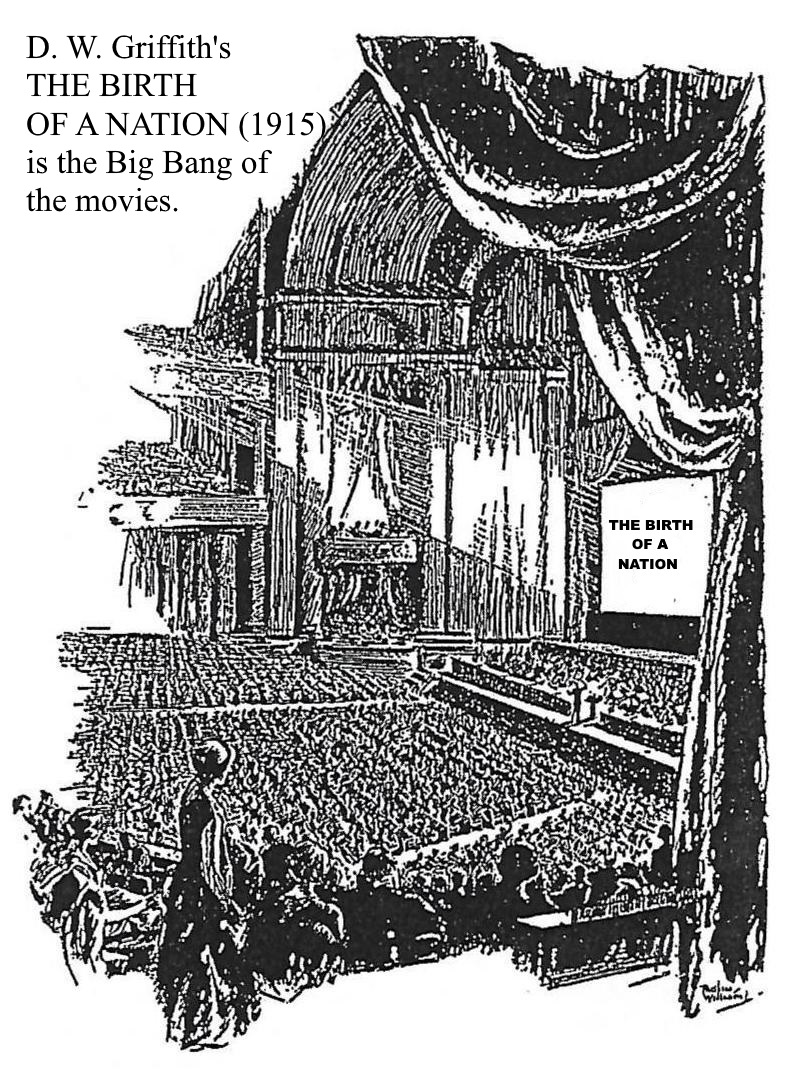
Before THE BIRTH OF A NATION (1915) the movies were cheap entertainment for people most of the public dreaded to encounter. All that changed over night with this picture.
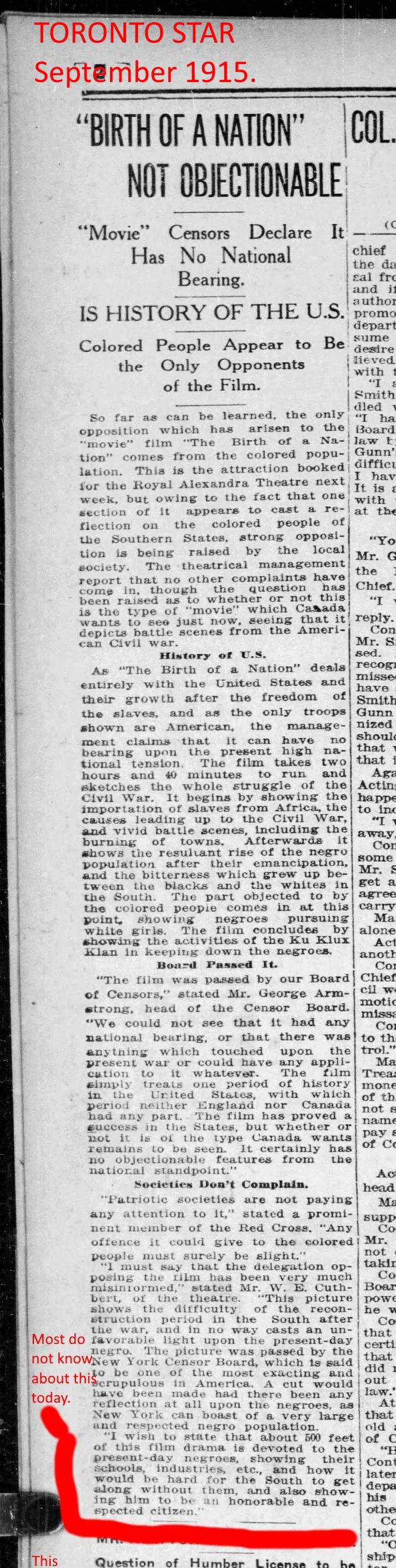
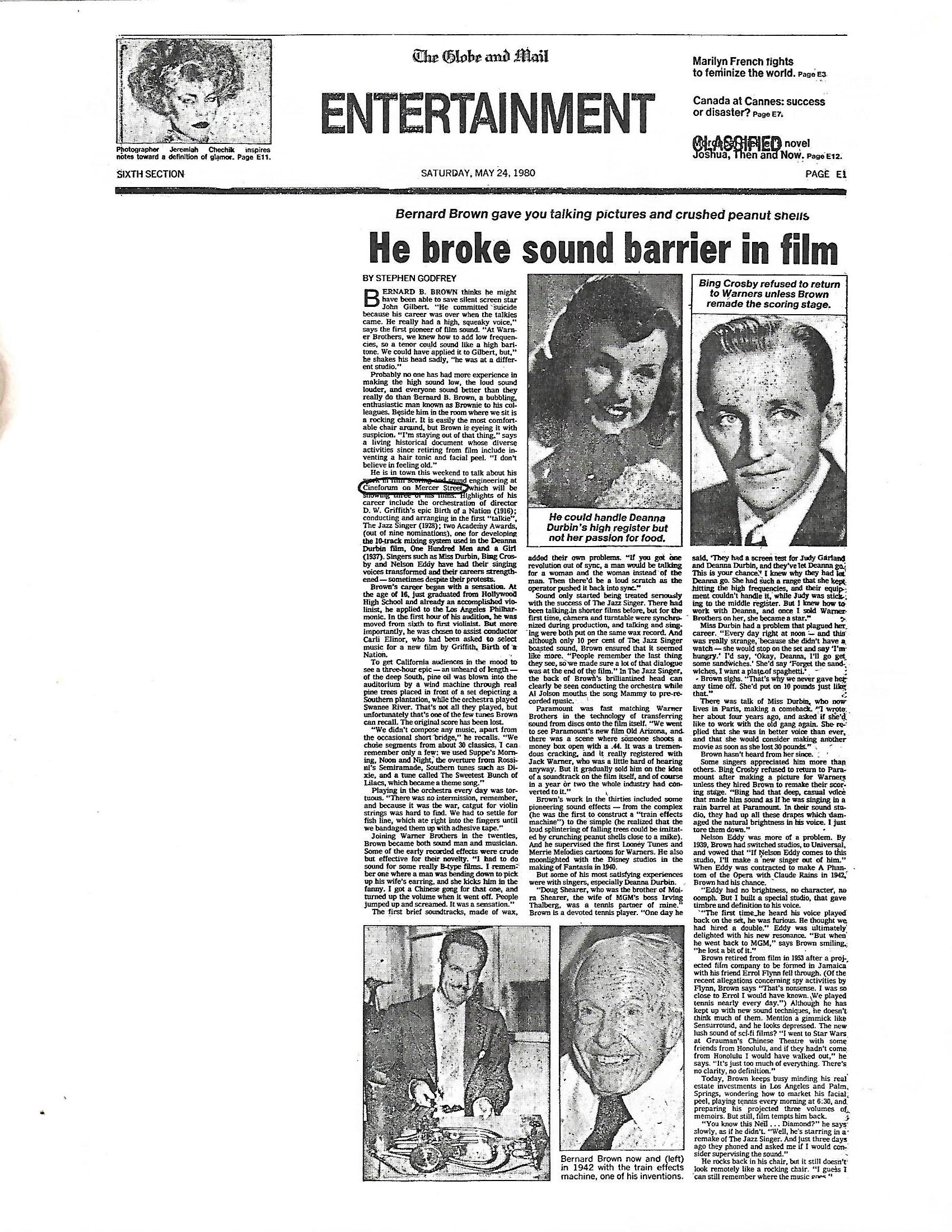
Griffith, alert to comments he was anti-Negro (he was not) added to the picture 500 feet of film that showed the great advances the Negro had made since Reconstruction. That footage was included in that 1915 release and in subsequent releases of THE BIRTH.
However the sound version of the film was shortened severely against Griffith’s objections from 199 minutes to under 90.
What was left was not the picture Griffith had made. This digest version was the version which, by many, he was judged by.
The current restorations of THE BIRTH do not see fit to restore to the picture the footage of the Negro advances. Presumably, this footage is lost.
I know it was in the version of the picture presented in Canada (see attached).
Griffith was adapting for the screen an at the time popular novel and stage play.
Stanley Kubrick when adapting Anthony Burgess’s CLOCKWORK ORANGE did not dream that influenced by it some would mirror the worst behaviour of the characters he gave life to on the screen.
When he realized that was happening he asked that the picture be withdrawn. It was withdrawn only in Britain.
Griffith was from the South. He saw in THE CLANSMAN the story of his father (one of the authentic heroes of that conflict. That was what attracted him to it.
When efforts were made to revive THE KLAN Griffith stated publicly the Klan was not needed.
In later years Griffith stated that presentations of his picture were best limited to serious film students.
In my presentations of silent films I include sound effects as well as music. The music is dramatically cued to the action.
This is called “Mickey Mousing” which makes it sound both easy and trite.
It is neither.
Griffith did not present to the public a silent picture. He created a sound and picture experience.
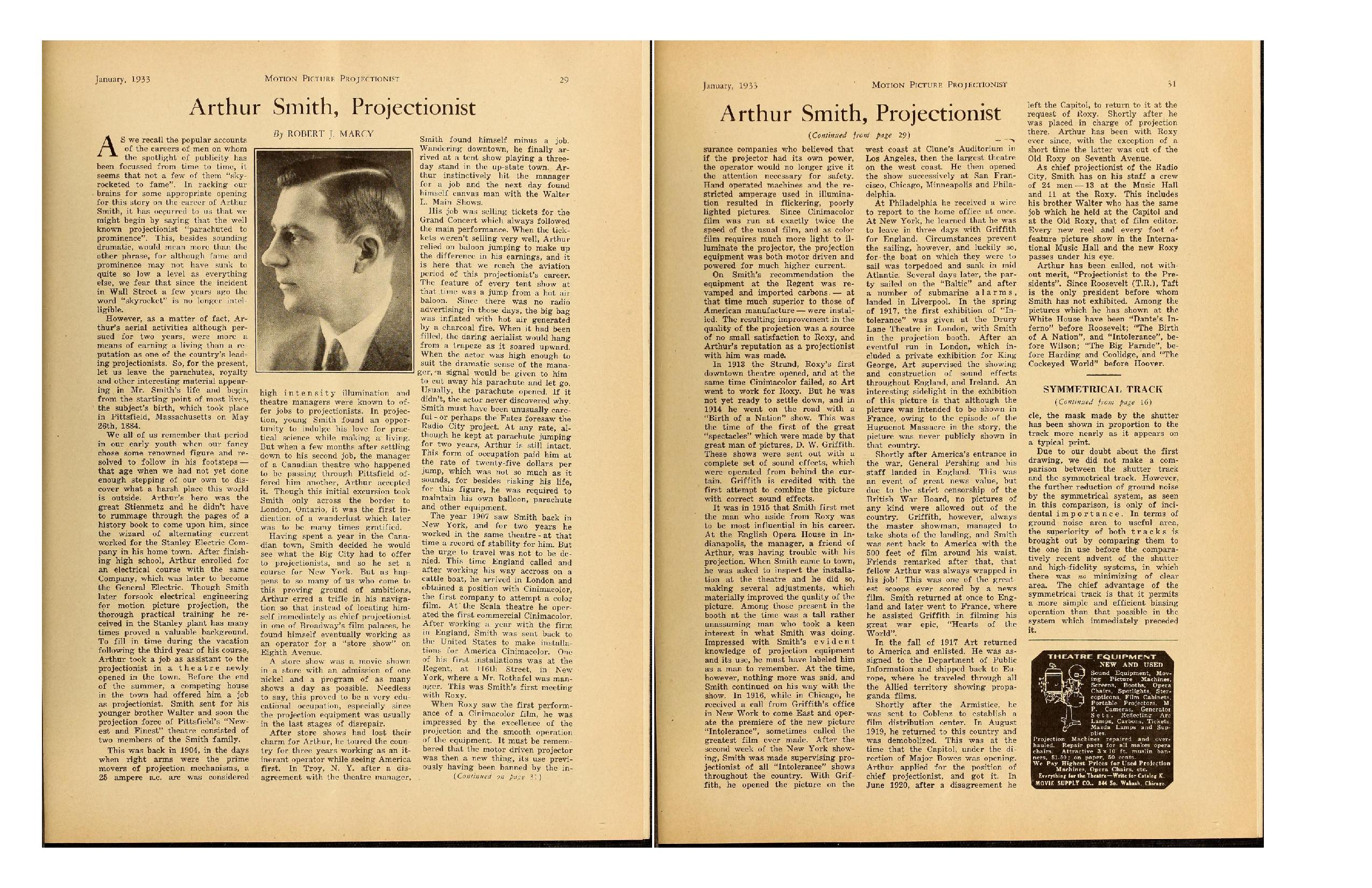
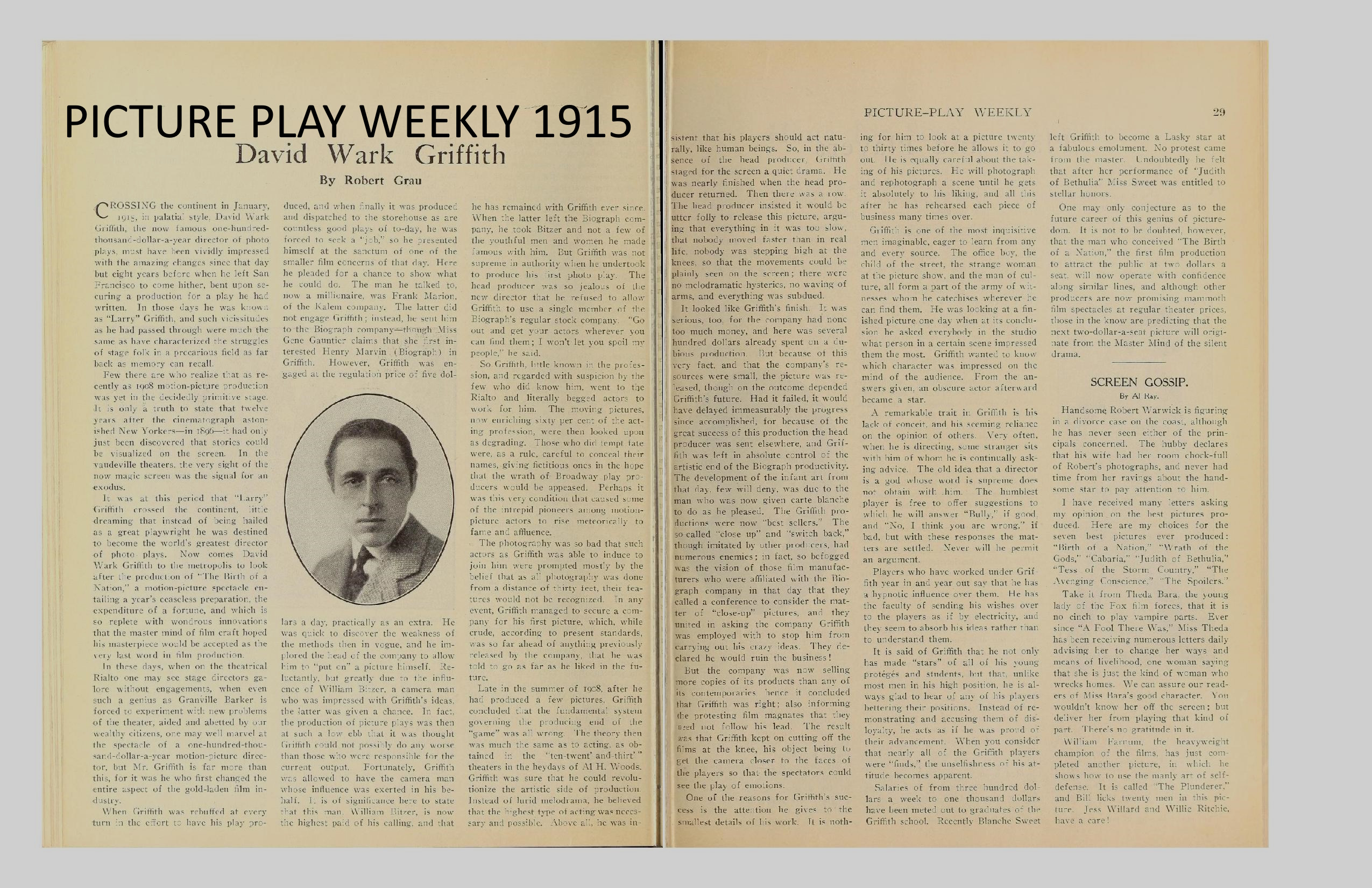
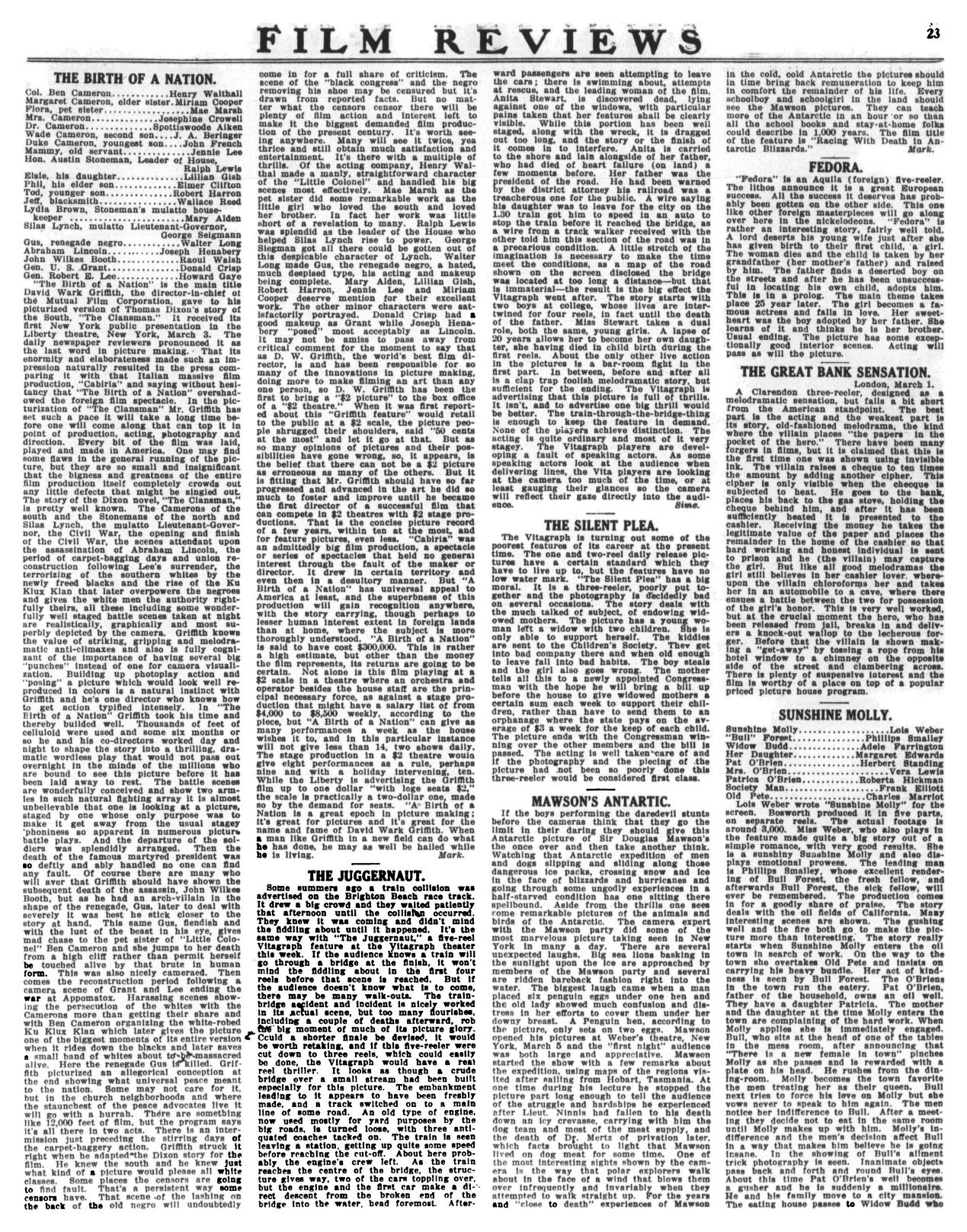
By raising the admission to Legit Theatre prices (today $100 a seat) Griffith not only was able to employ an orchestra, chorus and solo voice plus a sound effects crew (see attached piece on Arthur Smith) he was also the first to use two projectors instead of one.\
Is THE BIRTH OF A NATION (1915) the most controversial motion picture ever made?
Yes, it is. That is a virtue not a fault.
Controversey and the ensuing public hysteria it generate scan spell death to a career in academia, the civil service, politics, religion and much more.
In Toronto we lost a perfectly good mayor who had successfully steered us through the straits of covid because he had an affair with a much younger woman and, on top of that, was married.
Controversey, however, as has long been stated is the life blood of the arts.
Controversey, generally, starts with uninformed people attacking the informed.
The people who attack most often are not only uniformed but also wilfully uninformed.
Journalists who play to them play to the mob.
In the 1980s I presented another highly controversial picture, Leni Riefenstahl’s TRIUMPH OF THE WILL publicly in Toronto.
I was viciously attacked for doing so.
I am no stranger to mass media incompetence and ineptitude.
I understand the importance in standing up to and weathering both.
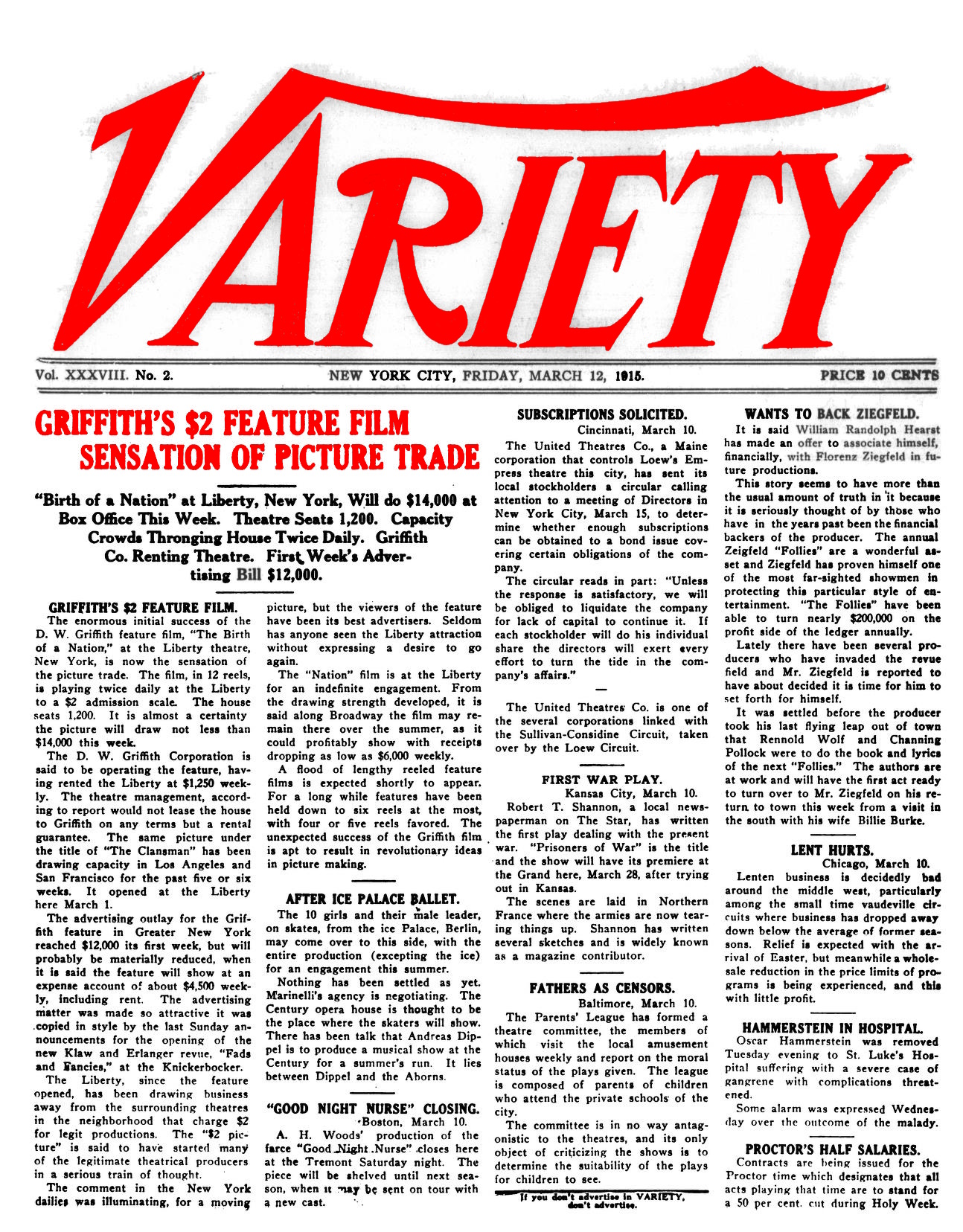
For example I did not know that in 1915 at THE LIBERTY THEATRE the top price for THE BIRTH was $2 there was also a sliding scale which began at 25 cents. This makes sense.
I learned this because I am now able to go the online archives of the motion picture trade magazines.
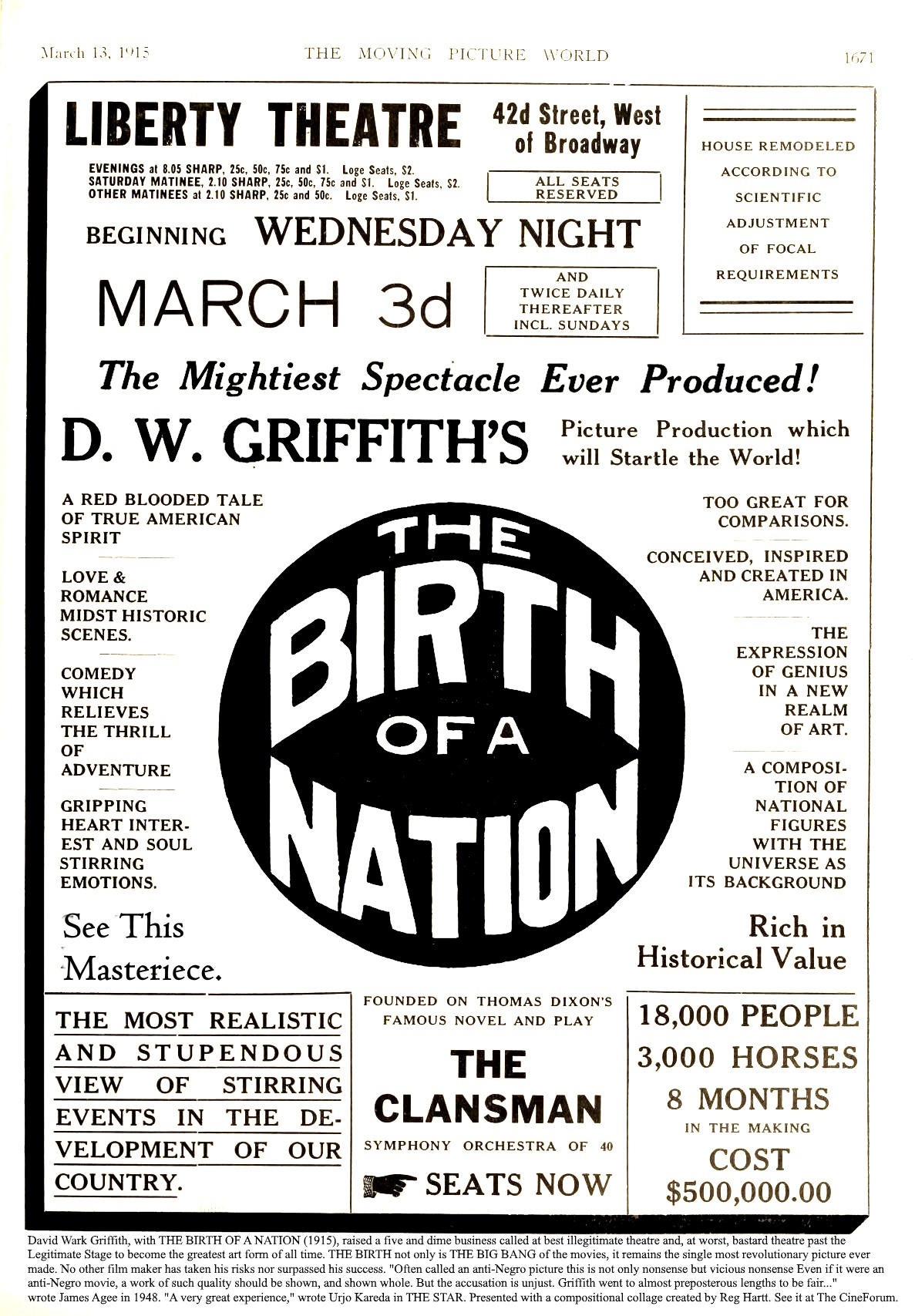
We are often told Griffith charged$2 for THE BIRTH OF A NATION. No one I said prices were on a sliding scale from 25 cents to $2. I learned this and much more I was not and am not being told by doing my homework.
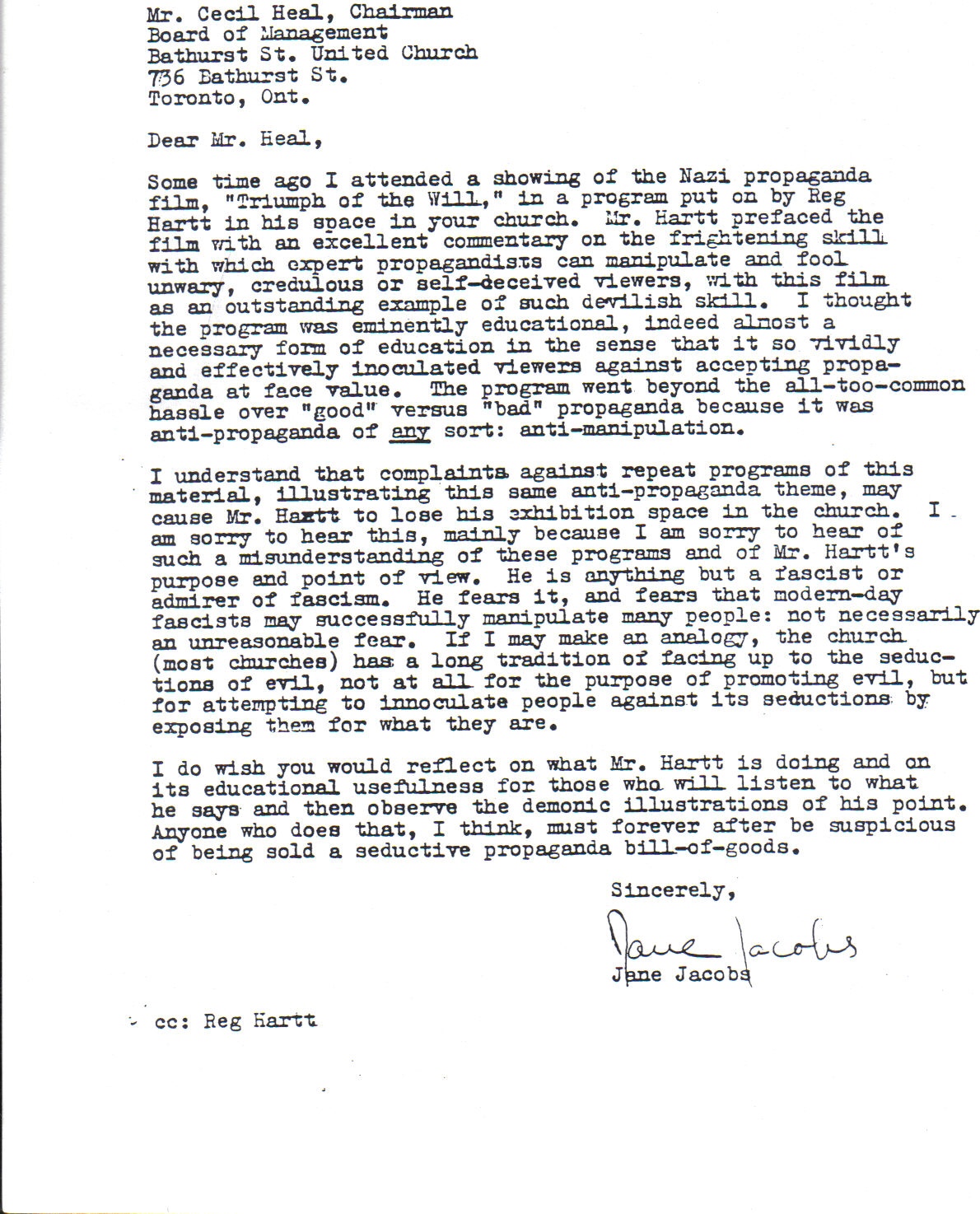
Many are quick to condemn my work. The uninformed (and the willfully uniformed) are in the many. One very informed person stood by me.
More than that I have done a level of digging into the archaeology of the motion picture art and industry few have done.
THE MOTION PICTURE ART AND INDUSTRY is a medium which was materially advanced by artists (chief among them David Wark Griffith) and historically taken five steps back for every one step advanced by the industry.
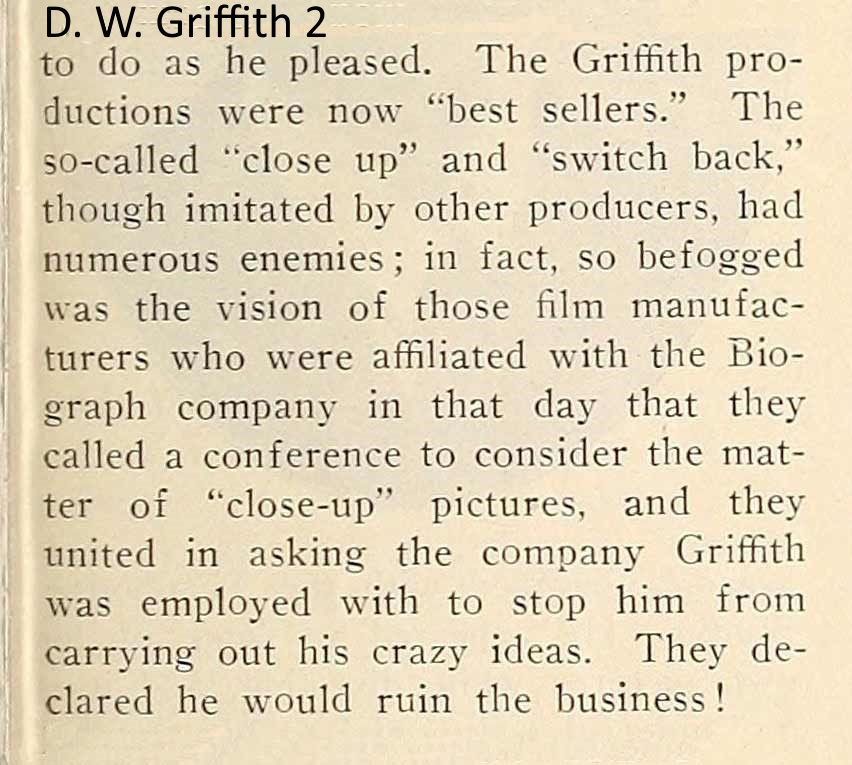
I learned this year that when Griffith began making one reel (ten minute) pictures for Biograph sets were routinely painted what was then called Biograph Brown which on screen looked like a word that rhymes with it.
Griffith, against tremendous objection, painted them a shade of gray which when finally viewed amazed all who saw it for how wonderful it looked.
David Wark Griffith has been and continues to be painted with a word that rhymes with it.
So, too, does THE BIRTH OF A NATION.
Perhaps the presumed missing 500 feet that paints the Negro in a warm light can be found somewhere in Canada. Then it can be restored to the picture.
When I began showing Leni Riefenstahl’s TRIUMPH OF THE WILL (1935) I spoke before it. Many were quick to condemn it.
One woman came many times. Many, many times. I asked her why. I thought she might be a Nazi.
“I am in it,” she said.
She told the first time she came she recognised her father, her mother, her brothers, her sisters, herself standing at a window waving Nazi flags as Hitler’s motorcade passed.
They were Jews. Excepting herself they all perished. She came back because for a brief few seconds she saw them again.
I moved back shocked. It was the last answer I expected.
I thought to have a still picture made of that moment. She never returned. I missed my chance.
I do my best not to now.
Movies are entertainments. Trifles.
Great motion pictures like all great art are not trifles.
David Wark Griffith’s THE BIRTH OF A NATION (1915) remains and always will be the single greatest motion picture ever made.
One student wrote, “I seldom feel a film’s greatness in film study class. I do feel it at Reg Hartt’s CineForum.”
When I put that quote on a flyer he was upset his teachers would see it.
That boy had no balls. Too many like him.
Come to The CineForum. It seats only a few.
Those few have gone on to matter.
Reviews:
“Reg Hartt teaches like Neal Cassady drove a bus.”—Joe Fiorito, Toronto Star.
“REG HARTT is what living in a metropolis is all about. He personifies the city as a meeting place of ideas, as a feast of experience and discussion and debate, as a triumph over the banal and soporific of the original and provoking.”–MICHAEL VALPY, GLOBE AND MAIL.
“In Toronto, I discovered by chance, CineForum. Pure chance but a fortunate one. In that small room exhaling culture, passion and dedication, I watched the movie TRIUMPH OF THE WILL, an important historical, political and social document., and real artistic achievement….As a journalist (in Romania) I worked in the cultural field, including film reviews. Therefore I came to the CineForum not just as a movie lover, but as a knowledgeable professional…We live in an era authoritatively dominated by brainwashing and political correctness…I admired Reg Hartt’s courage and passion put on in searching out and defending the human truth, the artistic truth, the historical truth; the Truth and unveiling it…Discovering Reg Hartt and his CineForum was one of the most important events of my visit in Toronto.”– JULIA SCUTARU, retired journalist, Bucharest, Romania, 2000
« Cartoons At Reg Hartt’s CineForum. Here it is at last, the book on Bob Clampett.It is by his daughter, Ruthie. Get it. »