
“When her Oscar-nominated civil rights drama “Selma’’ screened at the White House last month, director Ava DuVernay noted on Instagram that “The Birth of a Nation’’ — still the most controversial film in American history — was the first movie ever shown in the presidential residence.
“DuVernay explained the irony to a reporter: ‘D.W. Griffith, a very innovative filmmaker, who craft-wise was at the vanguard of filmmaking [but] was a complete racist, made a film that was epic and very widely embraced in 1915 which was . . . the worst piece of film you will ever see, if you believe in the equality of all people.’’’
https://www.nitrateville.com/viewtopic.php?t=19597
In the very earliest days of film set painters routinely painted everything brown.
Griffith said, “That looks like shit. Use gray.”
Reluctantly they used gray.
Seeing it on screen they realised gray looked wonderful.
D. W. Griffith was the product of his time as we are of ours.
Was he a complete racist?
No. Was he a racist? No.
THE BIRTH OF A NATION (1915) presents the American Civil War and the Aftermath of Reconstruction from the point of view of the White American South. It presents the ideas of that time accurately and honestly.
That those ideas are nonsense is not the issue.
DuVernay is a film maker whose work is accurate and honest.
That is all we can ask of anyone.
The revived KKK was against Blacks, Jews, Catholics and everyone not white, Anglo-Saxon Protestant which means it was against me.
Which means it was against almost all of us.
Some say the BLACK EXPERIENCE is not the same as the Irish or the Jewish experience.
They are right.
No matter how poorly Blacks were seen they were still seen to be of use.
For the Irish, the Jews and too many others deliberate, wilful extermination was the answer.
Labelling Griffith a racist is part of the hysteria our moment in time is engulfed in.
INTOLERANCE (1916) is not an apology. It is an indictment.
Properly presented both pictures are more powerful than anything produced since.
THE BIRTH OF A NATION shows slavery in its ideal state. What it shows us is that even its ideal state slavery is the worst idea the human race has cooked up.
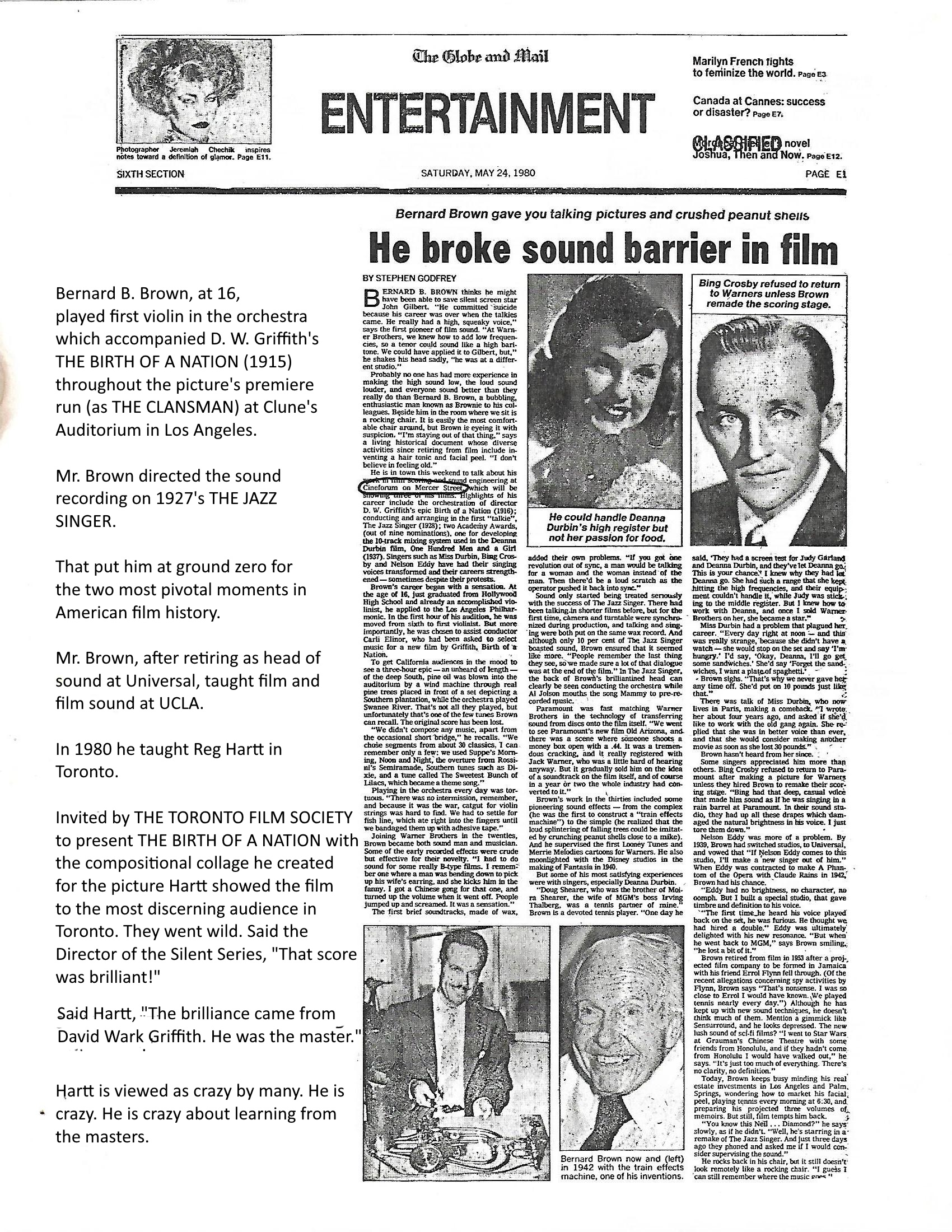
In 1980 I brought motion picture sound pioneer Bernard B. Brown to Toronto. Why? Because he had played first violin in the orchestra which accompanied THE CLANSMAN (as THE BIRTH was then called) through the 365 days of the picture’s initial run at Clune’s Auditorium in Los Angeles. He was 16 going on 17.
He had been concert master of the combined high schools of Los Angeles. Part of his duties was to order sheet music. His father falling ill compelled him to leave school to find work. He applied at the store from which he ordered sheet music.
The owner said, “I will give you a job but you should apply to the Los Angeles Philharmonic.
There he was put into a live audition. He said, “In that hour I went from 8th to 7th to 6th to 5th to 4th to third violinist. I never played second fiddle again.”
Mr. Brown directed the sound recording on 1927’s THE JAZZ SINGER (he can be seen in the picture). He served as head of sound at Warner Brothers and then at Universal. On retiring he taught film and film sound at UCLA.
For three wonderful days in Toronto he taught me.
My work with film in Toronto was inspired by the work of Claude Chabrol and Henri Langlois in Paris. I thought, “I could go there or I could do in Toronto what they are doing in Paris.”
Writers stated THE BIRTH OF A NATION no longer has the power to move audiences.
I felt properly presented it would.
Bringing Mr. Brown to Toronto was part of the extensive research I do on every subject.
I invited several members of Toronto’s most august film society to meet him. I invited them to join us for lunch at Allen’s Restaurant in Toronto (a branch of New York’s fabled JOE ALLEN’S).
“Reg,” said Mr. Brown after lunch, “Your friends are not very good people.”
When it came time to pay the bill I learned they had left their wallets at home.
Nonetheless, the real payoff was when I was invited to present THE BIRTH at their film society in an auditorium that sat 600.
I had created my soundtrack (which was designed not as a silent artifact but as STAR WARS demands to be presented–both pictures present rebels fighting against overwhelming odds) on reel to reel tape.
I arrived to find the projectors I was to use ran too fast while the tape player ran too slow.
Fortunately the projectors were in a sound proofed both. I decided to run parts of the picture in silence using the monitor speaker in the booth to synch up the score.
When the picture ended the audience was on its feet stomping and cheering. The director the series ran up to me saying, “That score was brilliant! I especially admired your inspired use of silence!”
Necessity inspired the use of silence. I learned a valuable lesson.
I threw out all of my old scores for silent pictures.
The Negro in America was deliberately kept in darkness. Booker T. Washington, in UP FROM SLAVERY, states, “During the whole of the Reconstruction period our people throughout the South looked to the Federal Government for everything, very much as a child looks to its mother. This was not unnatural. The central government gave them freedom, and the whole Nation had been enriched for more than two centuries by the labour of the Negro. Even as a youth, and later in manhood, I had the feeling that it was cruelly wrong in the central government, at the beginning of our freedom, to fail to make some provision for the general education of our people in addition to what the states might do, so that the people would be the better prepared for the duties of citizenship.
“It is easy to find fault, to remark what might have been done, and perhaps, after all, and under all the circumstances, those in charge of the conduct of affairs did the only thing that could be done at the time. Still, as I look back now over the entire period of our freedom, I cannot help feeling that it would have been wiser if some plan could have been put in operation which would have made the possession of a certain amount of education or property, or both, a test for the exercise of the franchise, and a way provided by which this test should be made to apply honestly and squarely to both the white and black races.
“Though I was but little more than a youth during the period of Reconstruction, I had the feeling that mistakes were being made, and that things could not remain in the condition that they were in then very long. I felt that the Reconstruction policy, so far as it related to my race, was in a large measure on a false foundation, was artificial and forced. In many cases it seemed to me that the ignorance of my race was being used as a tool with which to help white men into office, and that there was an element in the North which wanted to punish the Southern white men by forcing the Negro into positions over the heads of the Southern whites. I felt that the Negro would be the one to suffer for this in the end. Besides, the general political agitation drew the attention of our people away from the more fundamental matters of perfecting themselves in the industries at their doors and in securing property.”
My aim in presenting THE BIRTH with a sound score designed to actually move the audience was to show how vulnerable we all are once the lights go out and the play begins.
Booker T. Washington was right when he stated, ” I felt that the Reconstruction policy, so far as it related to my race, was in a large measure on a false foundation, was artificial and forced. In many cases it seemed to me that the ignorance of my race was being used as a tool with which to help white men into office, and that there was an element in the North which wanted to punish the Southern white men by forcing the Negro into positions over the heads of the Southern whites. I felt that the Negro would be the one to suffer for this in the end.”
The Negro is still the one suffering for this.
In The United States it has not ended.
If anything the fires of mass hysteria are burning brighter.
Adding fuel to them by using epithets like “racist” aids that hysteria.
Those people left their wallets home so that I could not hit them for a donation to my event.
I paid the bill.
David Wark Griffith had a commanding vision of the power of the motion picture as a light burning in the darkness able to illuminate the world.
I share that vision.
That visions means forgiving that we ourselves may be forgiven.
Too many of us seem to think we have done nothing for which we need to be forgiven.
All film makers stand on the shoulders of D. W. Griffith.
Not one of them has taken the risks he took.
However flawed the pictures might be American Film presented to the world a vision people found more exciting than they did that of the film makers of their own nation.
Historically, my Irish ancestors were viewed by as dangerous, uncivilised, and genetically inferior.
I’m proud of them. They stood up to ignorance.
That the one man most responsible for the birth of the art of the motion picture is today’s its most maligned shows how far the art he gave birth to has fallen.
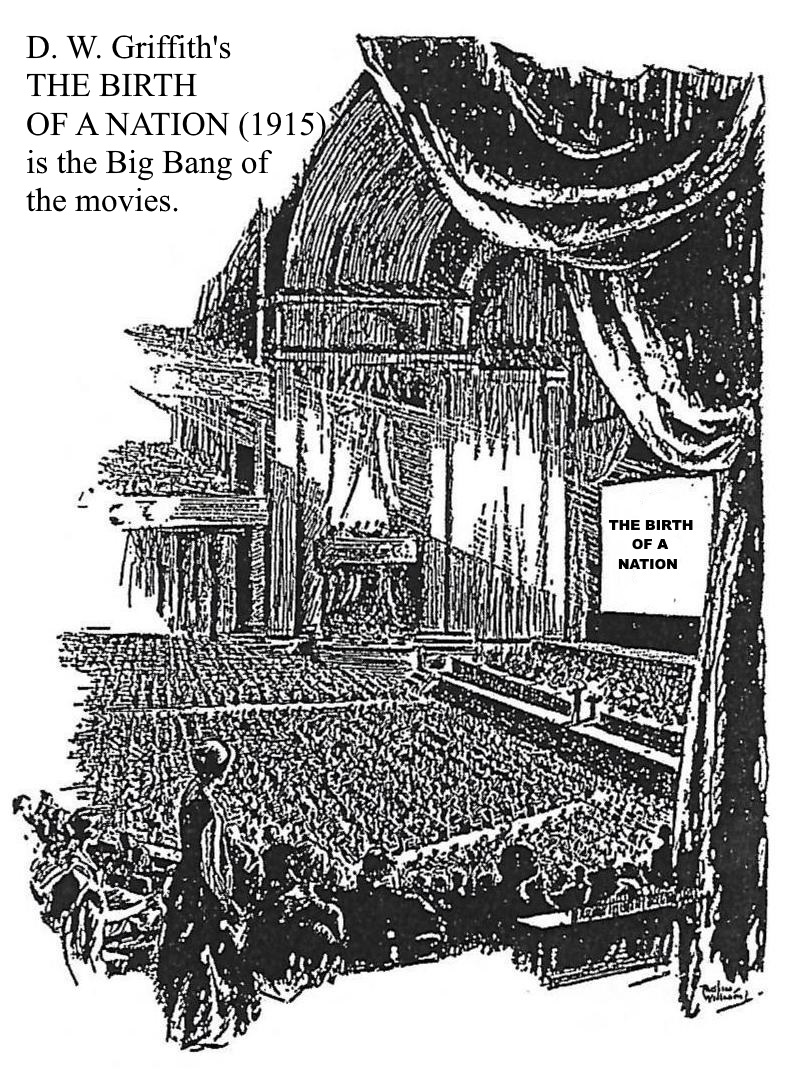
Griffith’s best pictures were shown in theatres that could seat thousands at legit theatre prices (today $100 a seat).
Today’s pictures can barely fill 100 seat theatres at prices comparable to when movie theatres were called NICKELODEONS.
Terry Ramsaye, in A MILLION AND ONE NIGHTS AT THE MOVIES, wrote that the audience for motion pictures is between 11 and 30, primarily between 14 and 24.
That is where the audience for motion pictures is today.
People between 11 to 30–primarily between 14 to 24–live to go out and have fun.
They don’t mind paying huge prices. The higher the price the m0re attractive the attraction.
They just are not going to the movies.
There is a lot we can learn from the father of film, D. W. Griffith, about putting bums on seats in theatres.
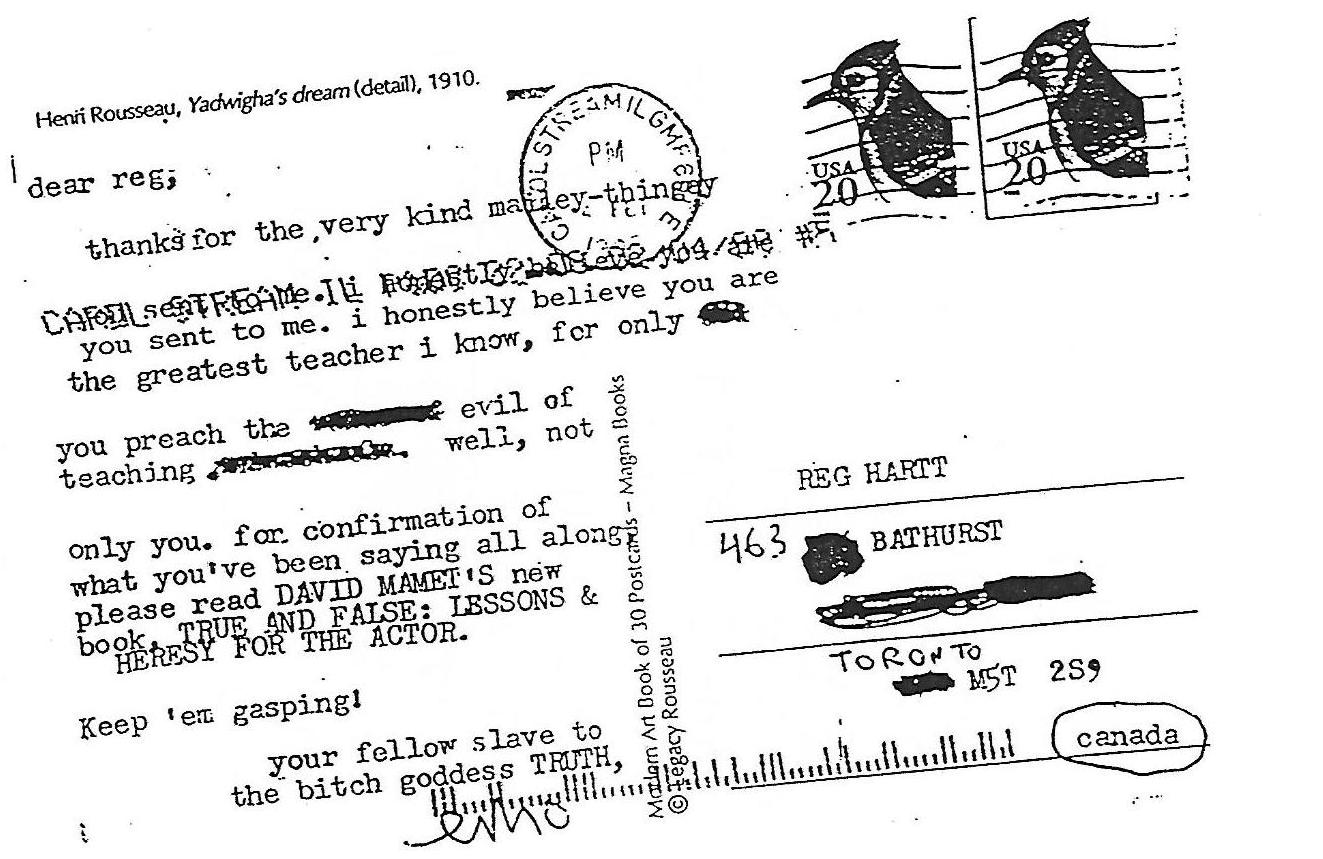
His detractors have nothing to teach us which is why David Mamet advised young film makers to stay out of school.
I’m with Mamet. Stay out of school.
« Paramount needs to make bringing Max Fleischer Cartoons back to theatres paramount. He who without the Muse’s madness… »